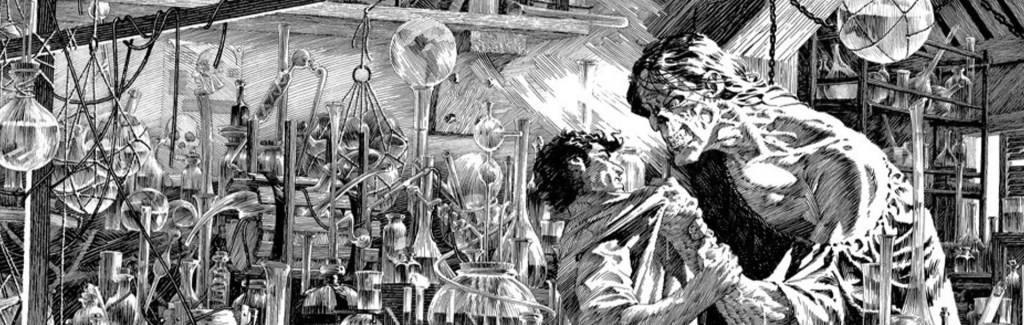
Ever since I was young, I had noticed the monsters all around me. They were in the books I read, the games I played, the movies I watched, and even cultural events. Loving Halloween was hard for a child who scared easily.

As I grew, my observation about monsters being everywhere ended up developing into the thought that monsters being created and people turning into monsters were everywhere. I started to wonder why that was? What was it about monsters that made complex ideas more digestible? Because they were certainly easier for me to understand through these physical changes.
Looking at one of the most iconic and identifiable monsters to day, Victor Frankenstein’s creature in Mary Shelley’s Frankenstein, may be helpful in answering these questions. Frankenstein’s creature has become a staple in the monster and Halloween landscape due to the success of James Whale’s 1931 adaptation Frankenstein which has many memorable scenes and lines. This is where the iconic line “It’s alive!” comes from.
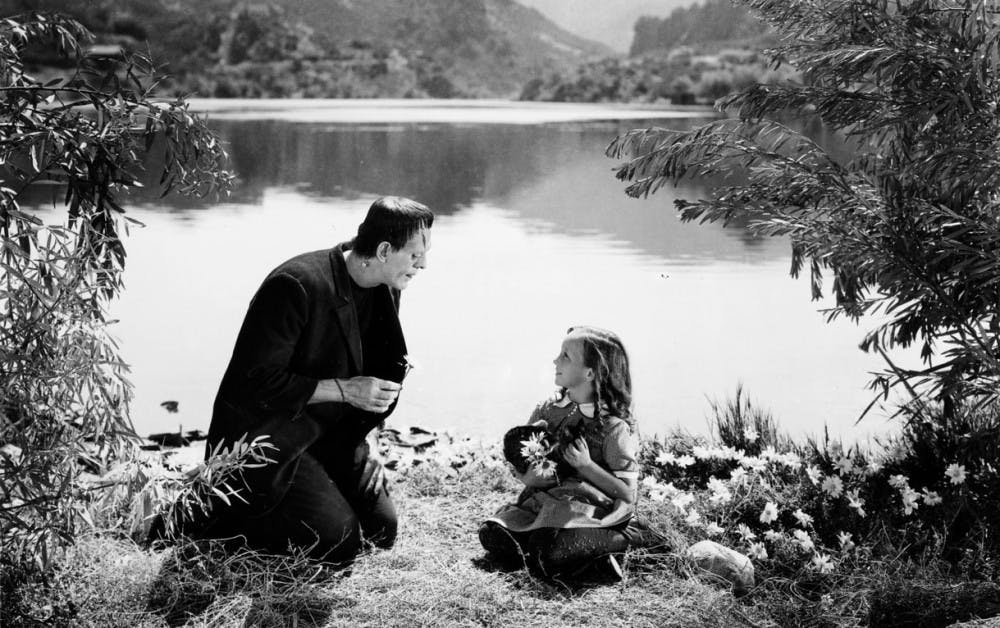
The exploration of the Other is the root of Shelley’s story. When we look at the amalgamation of body parts, we don’t see ourselves – we see something entirely disconnected from humankind. His flaws, grief, and tragedy are the creature’s to hold and the viewer lets him. I wonder if instead of being a creature of mismatched parts and he was just human, would the viewer allow the creature to keep these traits the same way?
The creature being not-quite-human allows the reader and viewer to explore complex concepts like the ones above, and also concepts like misogyny, objectively. Remember, Shelley was writing this in 1818, her highlighting the societal misogyny and social and visual outcasts should be seen as radical. Instead, because the creature is seen as something fantastical she is allowed to explore and make solid strong commentary about these societal aspects.
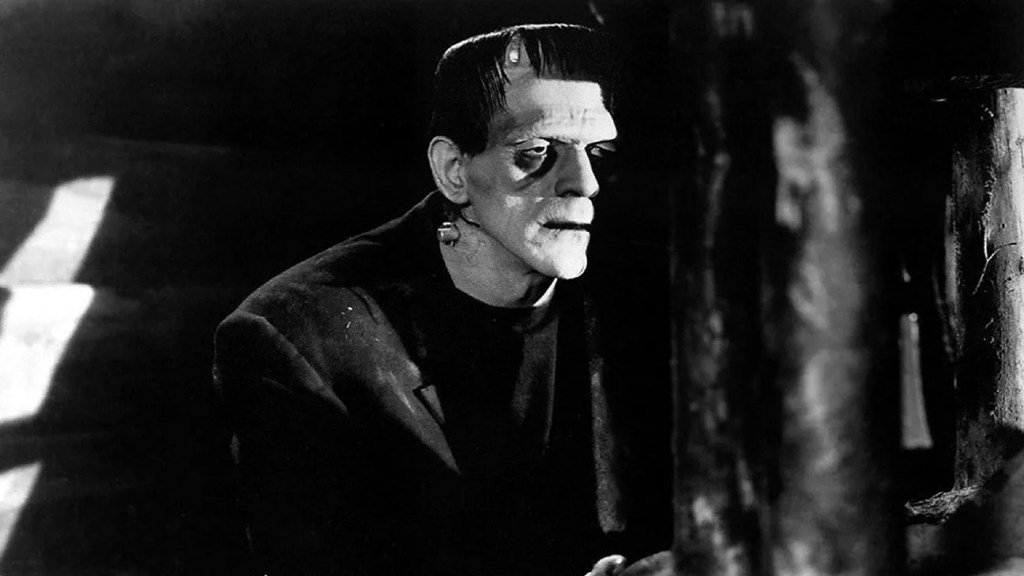
Rebecca Laurence suggests that “if the creature is perceived as a misshapen human rather than a monster, his tragedy deeps,” and I must ask, don’t we see this play out constantly? Both in media and in real life? We see humans who are Othered reap the consequences of being isolated constantly. When we are Othered and when we Other people, we create deeper tragedy for everyone. Maybe reading and watching any iteration of Frankenstein is just us looking at ourselves through a mirror.
When we see Frankenstein’s creature, be it on the silver screen or as a Halloween costume or decoration, it’s okay to see him as what he is: an icon! But maybe we should also take a second to think about the ways the creature shows us things about ourselves.
What is your favourite iteration of Frankenstein? If you don’t have one, that is your favourite monster and why? Let me know in the comments below!
Thanks for reading, and remember to stay curious.
See you later,
Lysh
Featured Image Credit: Bernie Wrightson. (1983). Frankenstein.


 Monster Chasing with Lysh
Leave a comment